Musings from Private Lessons: Shibaru and Shibaraseru
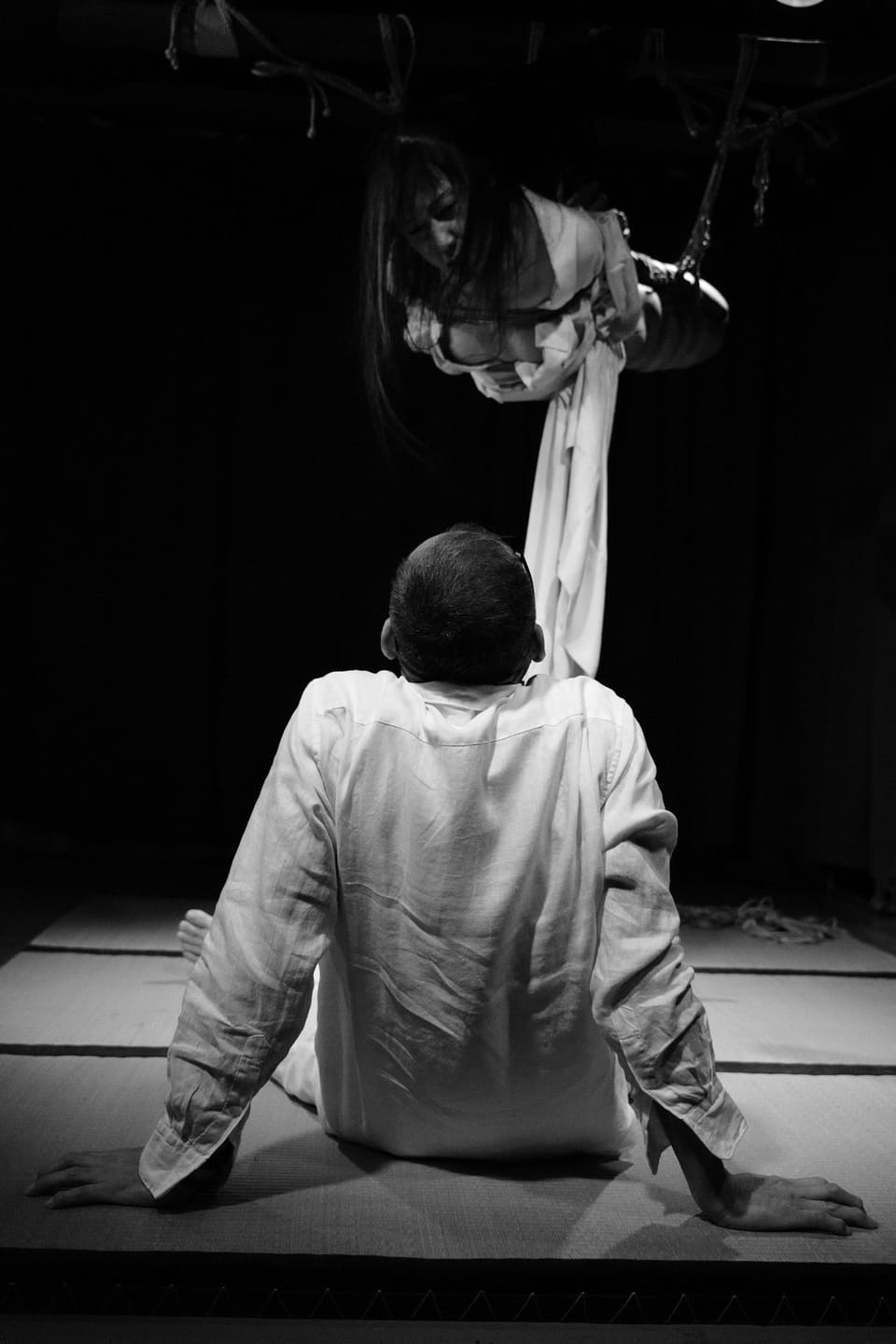
October has arrived with its slow rain and dim skies. The air feels heavier now, full of that soft, grey stillness that seems to ask for contemplation. I welcomed my student S and his partner R from Portland, Oregon once again. We first met in June, at my evening class at Voxbody Studio in Oakland, California. The days were bright then, the air warm and full of light. It seemed to mark a beginning — the first spark of something they had thought lost. They had found the courage to re-ignite their passion, to remember their shoshin (初心).
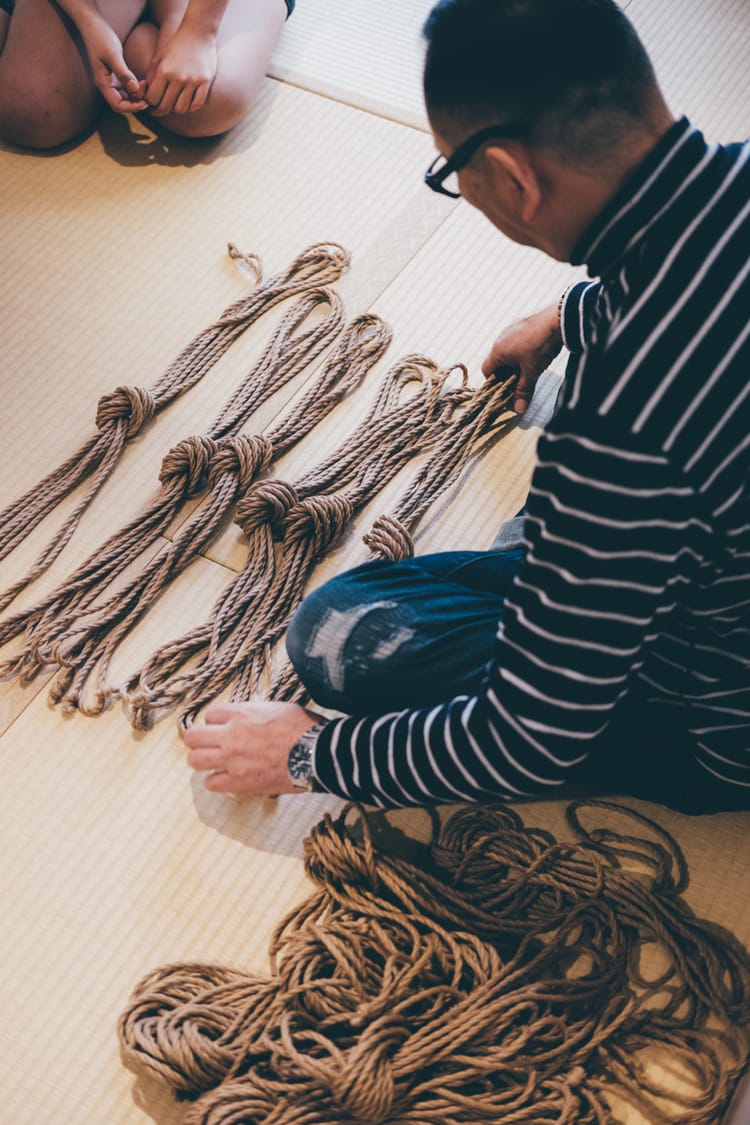
Now, months later, under the colder skies of London, S spent a week studying and searching for his kokoro — through a workshop in Yukimura style with Ibarako-san and Ritsuko-san, and intensive private lessons with me and my models.
“Please tie my model, Awa,” I said.
“Tie like you mean it.”
This is how we started our private lessons.
He struggled to capture Awa with his rope. So he used more strength and intensity, sweating more and more, only to find that the harder he pushed, the further she drifted from him. Feeling confused, he looked at me, perhaps seeking guidance.
“Don’t look at me. Look at Awa,” I said quietly.
At this point, Awa was tied in Gote Shibari, lying on the tatami.
He looked toward her free legs. Should I tie them? His eyes seemed to ask.
It was not the first time I had seen this. Students often focus on the possibilities in the rope and the body, rather than the desires in the people. It is as if it is their mission to restrict every single body part until there is no space to move at all.
So I asked him to look deeper.
This concept of looking seems so simple, yet I always wonder — what do people really see?
I think of Naka-sensei, the way he looks. It is never only with his eyes. It is with his heart.
“Look into her heart. What are her desires?” I said.
For me, if you can read the desires, then it becomes clear how to tie.
It’s not about technique. It’s about sense — a sensitivity to what lies beneath the surface.
After he untied, I commented, “You were thinking about the rope, but not feeling her desires.”
We chatted over tea and snacks, and S confided that after two years of learning the technical details of semenawa in suspension, he had lost his passion for tying.
“You seem to be describing what I think of as nawaseme,” I said.
We discussed the difference between nawaseme — “using rope to do seme” — and semenawa — “rope that is inherently seme” (I will save the deeper discussion for another journal).
Personally, I don’t do nawaseme because it does not excite me. But I also cannot say I do semenawa. It is not something I can say I do. It is something that just naturally happens. It is experienced by the person I tie, in that moment.
I tie to unravel those desires. In a way, I am not tying the model — shibaru (縛る). I am made to tie the model — shibaraseru (縛らせる).
I remember Sugiura Norio saying in one online event during COVID:
“女を縛りして貰う.”
I receive from the women the gift of being tied up by me.
After the break, I asked S to tie again — this time, to tie Gote Shibari with me. His partner R, watching, said softly, “You finally looked at her.”
I suppose he started to understand, even just a little, shibaru and shibaraseru.