The Colours of Iroha: Reflections on Modelling in Kinbaku
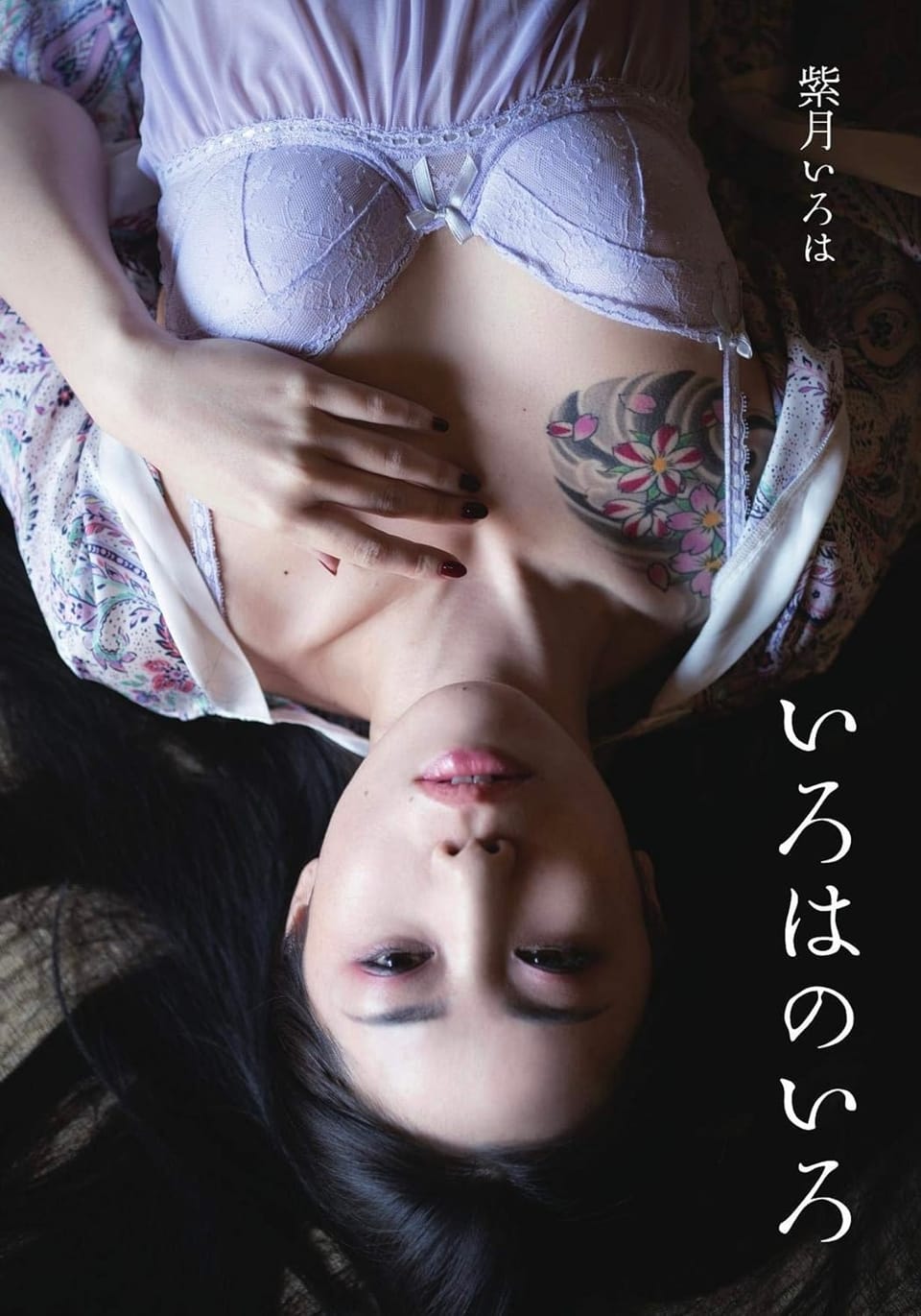
As Yukimura Haruki sensei once remarked, “Shibari only has meaning if it means something for the one getting tied (縛りはモデルさんにあって事).” Kinbaku exists not just in the hands of the one tying, but in the desire of the model.
The model breathes life into the rope and creates meaning.
It strikes me that much of Kinbaku learning today centers on the Kinbaku-shi — the techniques, the philosophy — while the model often stays in the background. It wasn’t always this way. Long gone are the days when only the model’s name appeared on the publication, and the person tying remained anonymous — sometimes even wearing sunglasses to stay hidden. Why has this shift become the norm? And how does it shape the way we understand Kinbaku?
Some people are trying to make a change. More models are beginning to speak openly about their experiences, and some events now hold space for those voices. Conversations often revolve around both hard and soft skills — rope safety, body awareness, as well as how to show up in a session, how to navigate emotions, how to be present. It’s a rich and, for many, empowering discourse.
Yet, for reasons I can’t quite articulate, part of my heart remains untouched. In the midst of this discourse, sometimes I find myself quietly confused.
At Naka Akira and Shizuki Iroha’s workshops in Europe in recent years, students often asked Iroha-san, “You have such beautiful expression in your fingers and feet. What do you want to present to Naka-sensei, and how do you feel?” Many times, she responded with quiet silence or a thoughtful hum “うーん…”
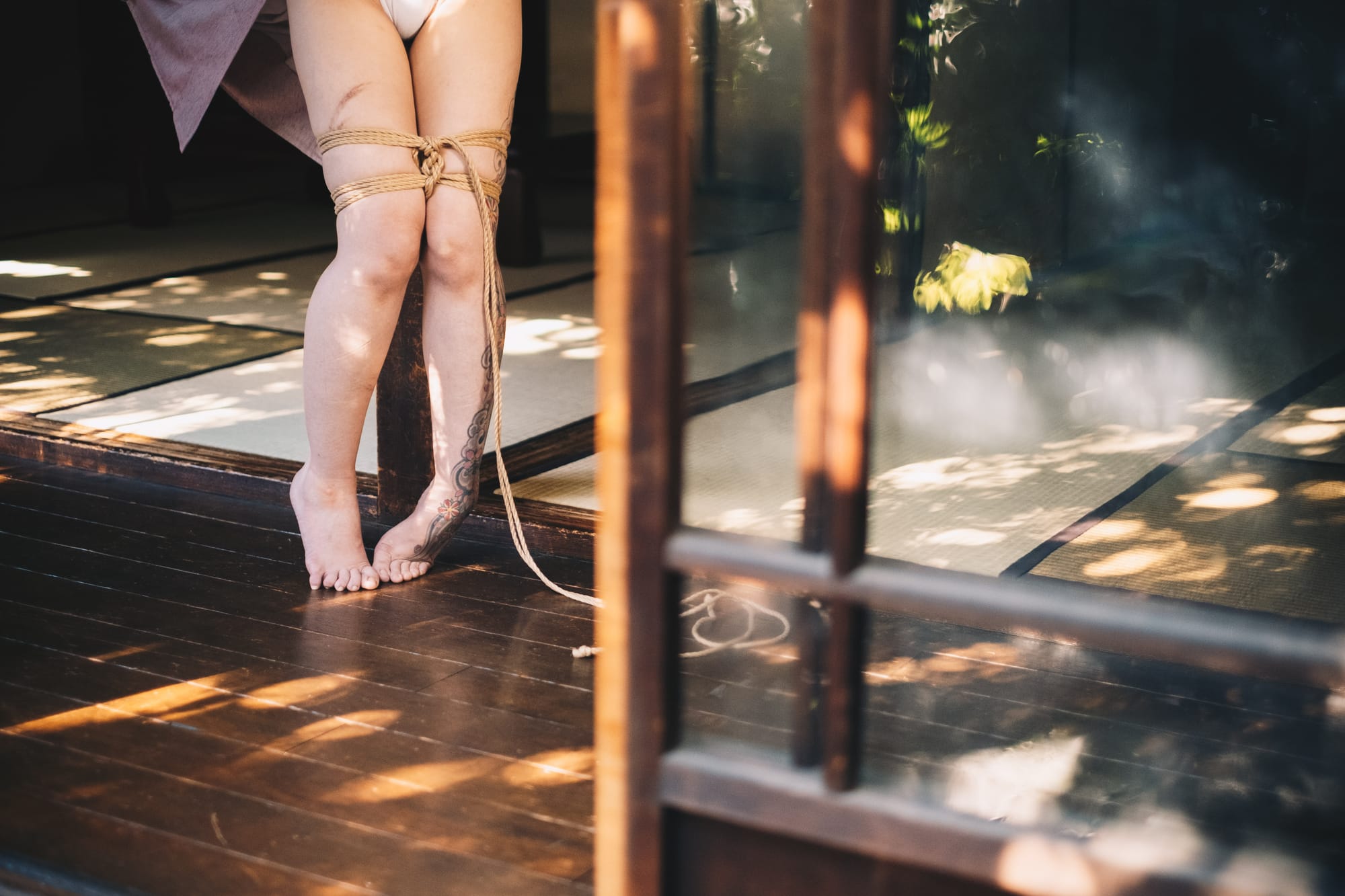
During the workshop in Antwerp in 2025, when a similar question was posed to her, she shared, “Naka-san would never ask me to pose or act. When I am tied, I am not doing or thinking about anything consciously. The way I express is simply who I am - just my natural self.”
And I thought, that is it. Being real. Being natural.
I always find Kinbaku fascinating — it is so nuanced, yet so simple. I’ve often heard people ask, “Why do you tie — or be tied?” I admire those who can give thoughtful, reasoned answers. And yet, somehow, the simplest response — “I don’t know. I just like it, and I can’t live without it.” — carries the most weight for me. There’s a clarity in that ambiguity — a quiet tug in the heart that needs no explanation, no reasoning.
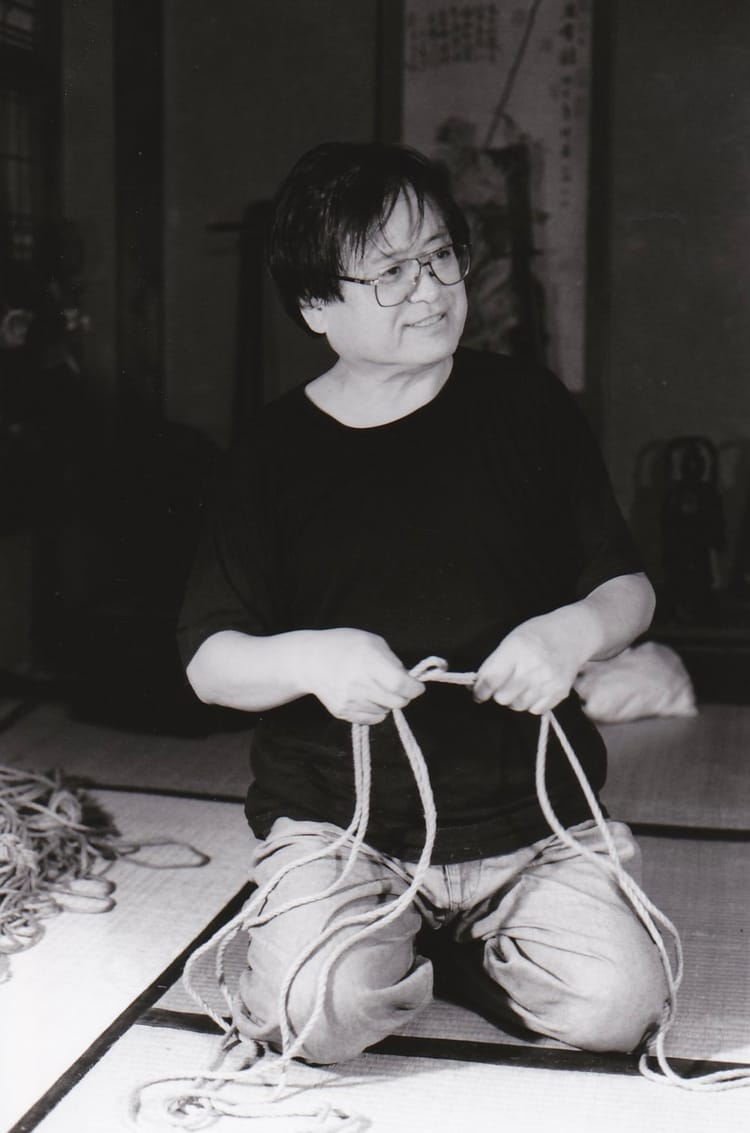
When I asked Iroha-san why she wanted to be tied by Naka-sensei in the first place, she said she saw Naka-sensei’s profile. There were no pictures or videos of his Kinbaku, just his face. She simply thought, “Yes, that angry-looking man. I want to be tied by him.”
It is that simple — the pure desire, not in the rope, but in the person.
Because of this deep desire, which cannot be put into words, you naturally give yourself fully. In a way, it is not so much about receiving, but about giving.
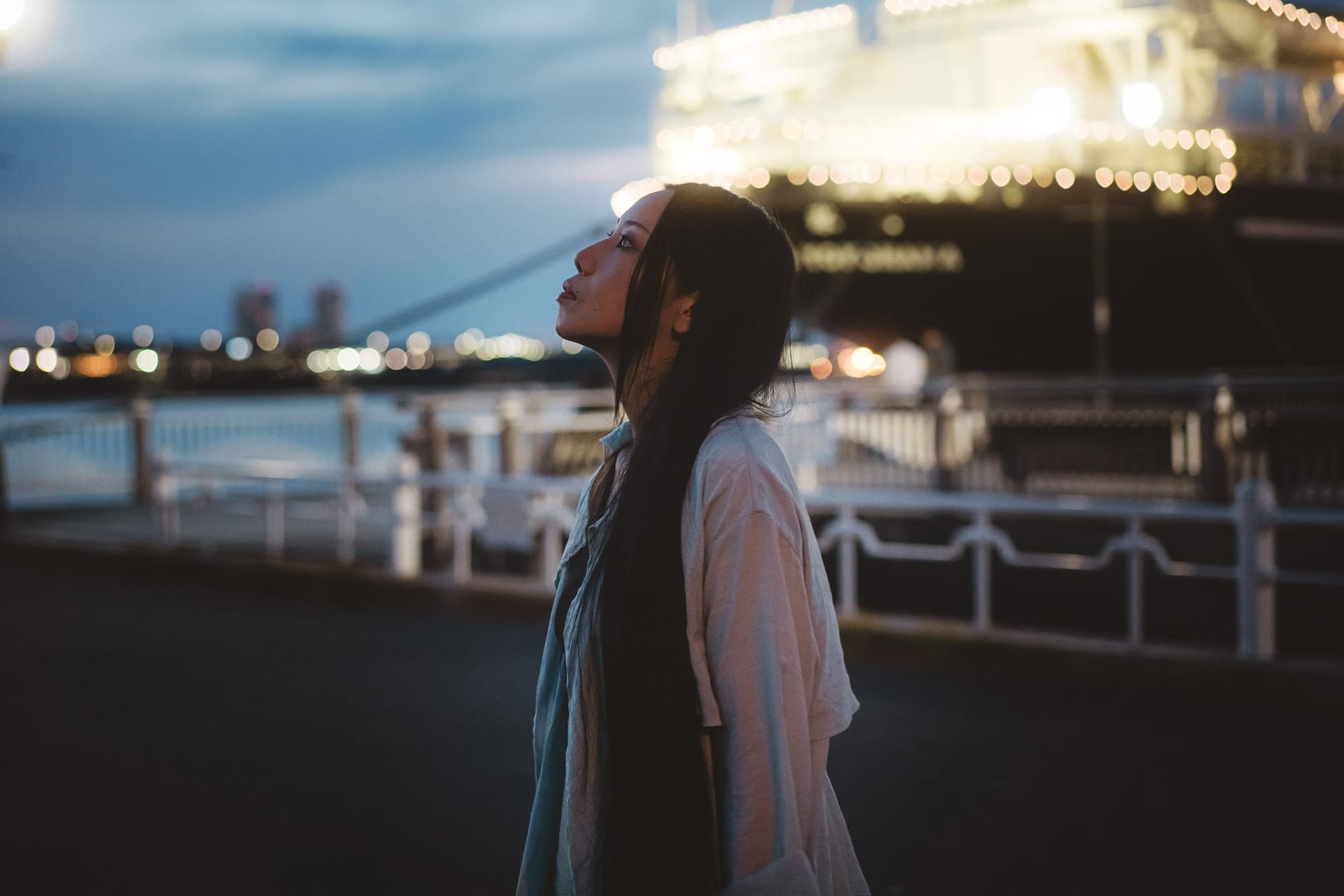
In January 2025, I had the rare privilege of hosting an online event with Iroha-san. Translated by Yuka-san and joined by nearly 100 participants from around the world, the conversation offered an intimate glimpse into Iroha-san’s life and her experiences within the Kinbaku world.
She described her childhood as, in many ways, ordinary. Born and raised in Kanagawa, she grew up in a typical Japanese household, with the familiar rhythms of school, exams, after-school clubs, and daily routines that shaped her “girl-next-door” sensibility. At the age of twelve, her mother remarried an American man, sparking her enduring love for bands and live music.
During her teenage years, much of her time was spent caring for her younger stepsister and managing household responsibilities, leaving little space for personal ambitions or youthful indulgence. “I didn’t really have any dreams, which sounded incredibly sad,” she said.
Around the age of twenty-seven, a family member fell ill, and she needed to find a way to earn money quickly while still dedicating time to her responsibilities at home. This is when she entered the AV industry and was tied with rope for the first time. “It was like an awakening,” she recalled. “I didn’t even know what the feeling was, but I realized immediately there must be a real world of Kinbaku that exists outside of AV.”
Through an introduction by Aoi Mari, Iroha-san was tied by Naka-sensei in a Nawa-Kai in February 2012 for the first time. In subsequent performances, she understood the real risks — both physically and emotionally. Learning of Naka-sensei’s heart condition added another layer of gravity. “He’s risking his life to do what he’s doing,” she said. “So I feel like I also want to risk my life as much as he does for what we’re creating together.”
Eventually, Iroha-san felt, “It’s okay if I die in his ropes.”
Iroha-san’s bio remains one of the most beautiful I’ve ever read:
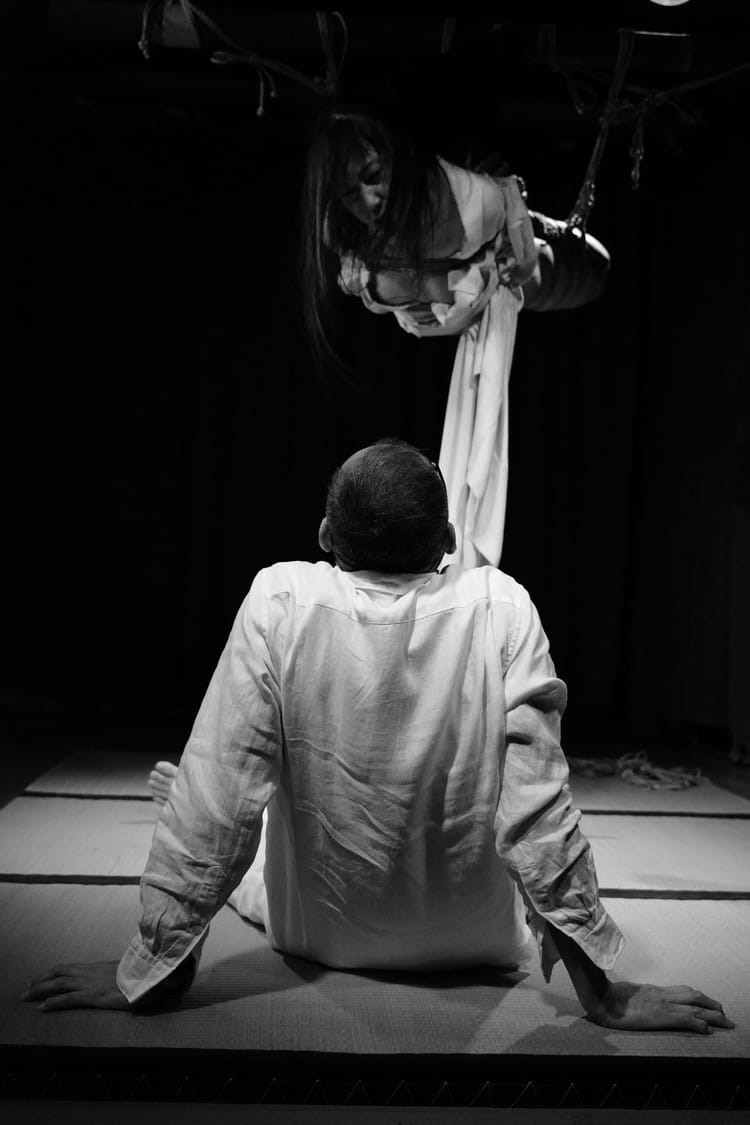
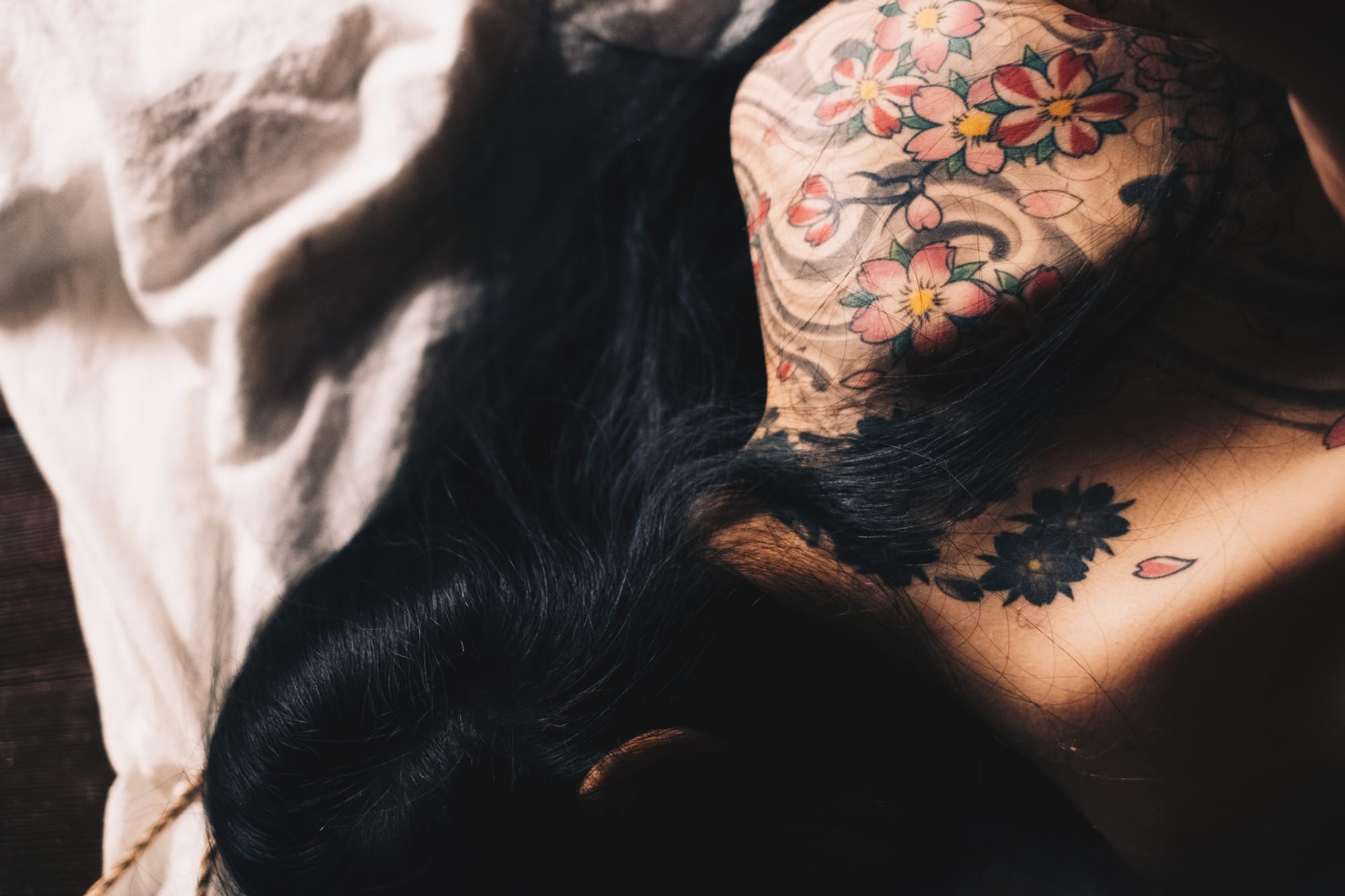
With her very long black hair and vibrant, yet sorrowful cherry blossoms that flow down her body, she has a uniquely Japanese atmosphere. There is no end to the number of people who are captivated by the sight of Iroha, who peacefully endures, yet quietly burns with life.
彼女の長い黒髪,体に流れる哀しいほど鮮やかな桜,そして独特な和の雰囲気。静かに耐え,静かに命を燃やすその姿に心を奪われる者はあとをたたない。
When I asked about her tattoos, she told me that in the early days she had only small ones—a modest mark on her neck, another on her ankle. As she considered adding more tattoos over time, she said, “Naka-sensei has blue-toned tattoos, so I thought a vibrant red would contrast well.”
I remember thinking about how tattoos can bring inconvenience in Japan — the judgments of others, the restrictions of onsen, even how one might be perceived as a wife or mother. Against that backdrop, her words struck me: “I knew it was going to be me and Kinbaku for the rest of my life.”
When I asked about her hair, she smiled and recalled how Naka-sensei once told her, “Your hair is so nice, never cut it.” And so, she let it grow.
In December 2024, I saw the performance Nawa Miyabi in Tokyo, where Iroha-san was tied by Naka-sensei. Naka-sensei was struggling with his heart condition. I saw his staff anxiously holding his medication. My heart was racing as I looked at their faces — I finally understood isshōkenmei (一生懸命).
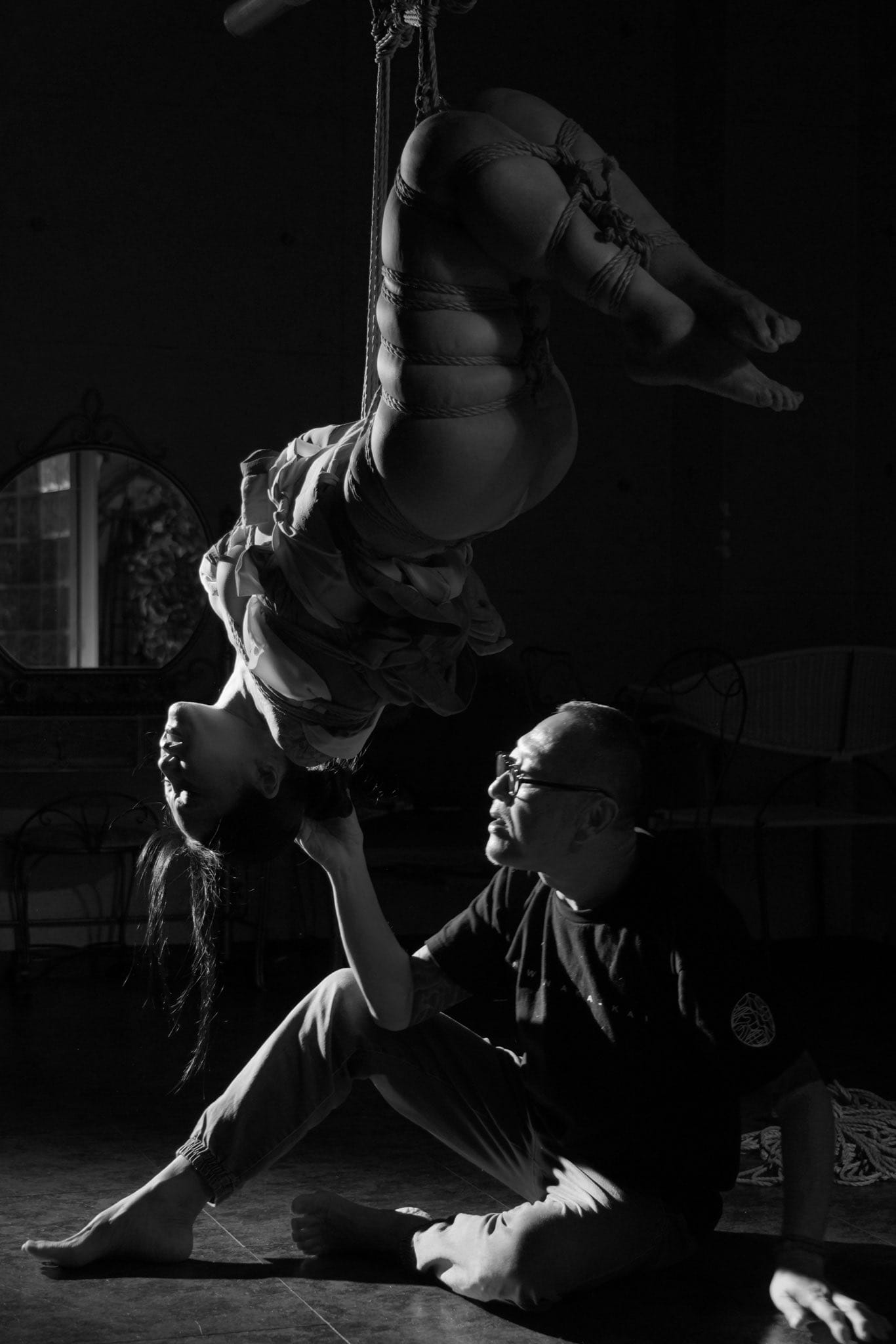
Iroha-san has modeled for me over the years — private lessons, photoshoots, performances. I have always admired the depth, dedication, and quiet humanity she brings to Kinbaku.
In listening to her personal stories, I feel her giving. Giving to her family. Giving to Naka-sensei. Giving to Kinbaku. Giving is a virtue — not a skill or technique to develop in modelling.
In her giving, I feel her heart. Her kokoro - the one thing I seek and hold dearly in a model.
“As long as I still get calls from Naka-sensei, I will keep going,” she said.
Shizuki Iroha — who peacefully endures, yet quietly burns with life.
Find out more about Shizuki Iroha: