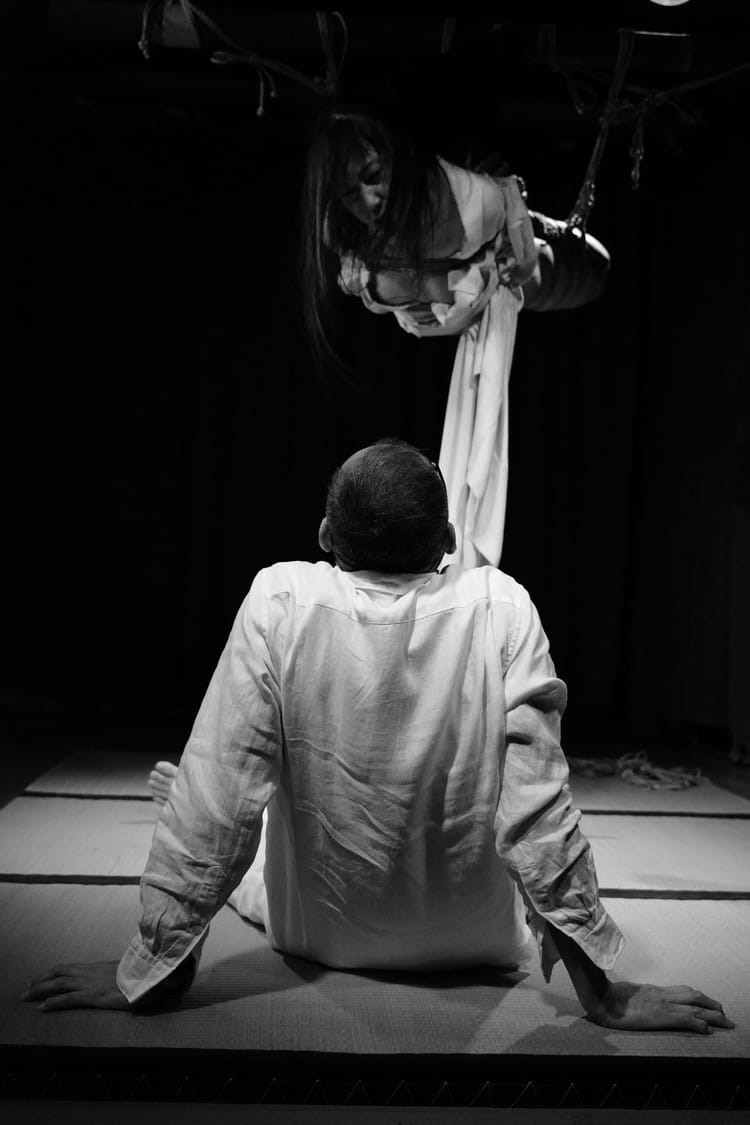
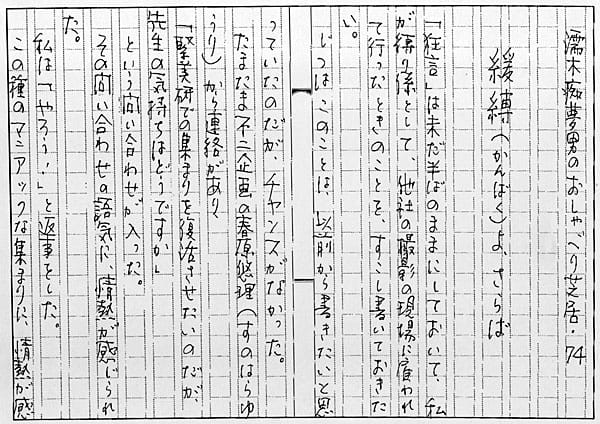
Remembering Nureki Chimuo 濡木痴夢男 (1930-2013.9.9)
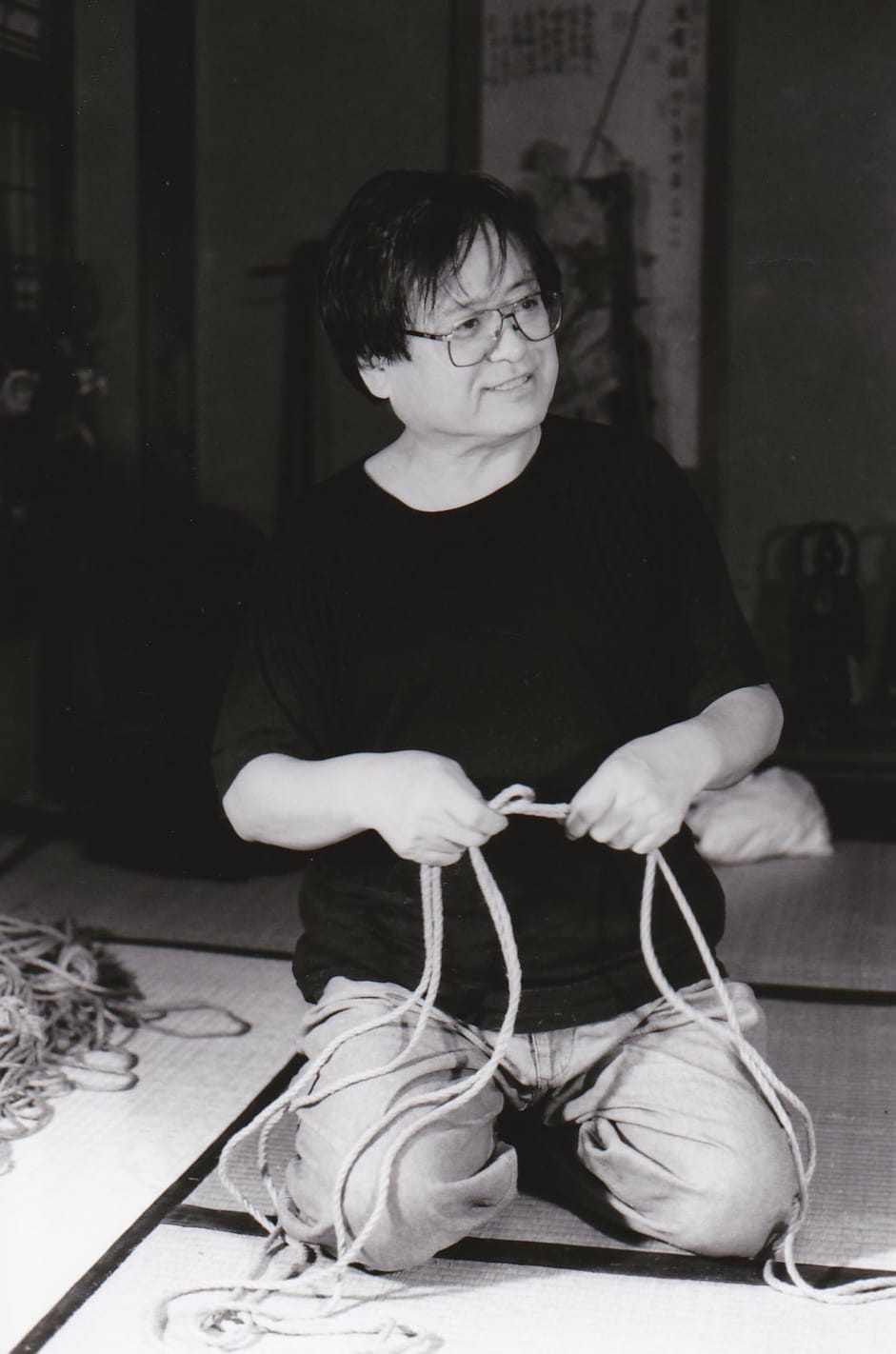
September 9, 2025, marks the 12th anniversary of the passing of Nureki Chimuo (濡木痴夢男).
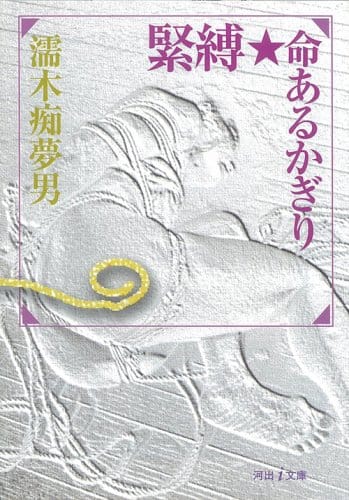
Nureki Chimuo was a pivotal figure in the development of Shōwa-era SM and Kinbaku culture. Active as a writer, editor, and Kinbaku-shi from the 1950s until 2013, his career spanned more than five decades. As he reflected in Kinbaku★As Long as There’s Life (緊縛★命あるかぎり, 河出書房新社, 2008), “his energy and creative activity did not diminish even in the 21st century.”
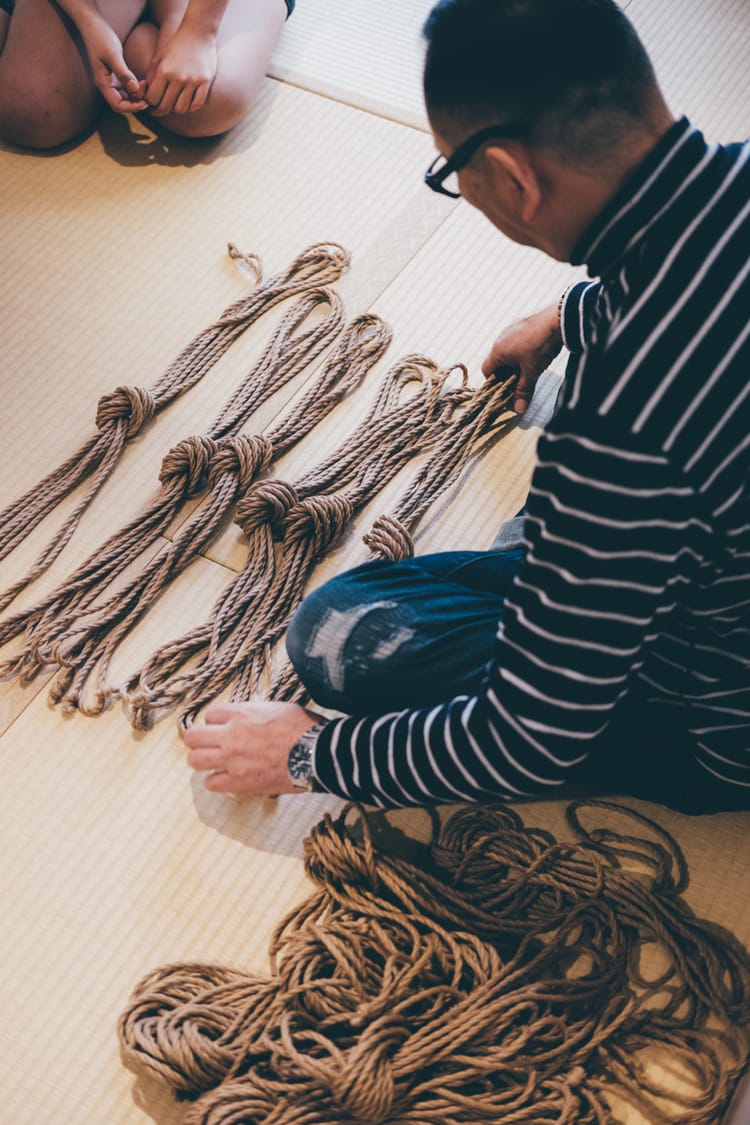
To this day, Naka Akira sensei often recalls Nureki Chimuo at the Semenawa Kinbaku Kenkyūkai (責め縄緊縛研究会) held worldwide. Naka-sensei, who originally ran a modelling agency, first encountered Nureki Chimuo during a video production. Captivated by the “depth” in Nureki Chimuo’s Kinbaku, he began attending Kinbiken (Kinbaku-bi Kenkyūkai 緊縛美研究会) for five years.
Naka-sensei described his first impression of Nureki Chimuo’s rope work as “deep.” It wasn’t simply “amazing”; it was “deep.” Those who only see the technical skill might call it “amazing,” but those who try to understand what the tied woman is feeling will sense its depth. You might say, “But isn’t it obvious? Everyone looks at the person they’re tying.” But is that really true? Many people seem to focus only on whether the person is their type or marvel at how well they endure a tight binding.
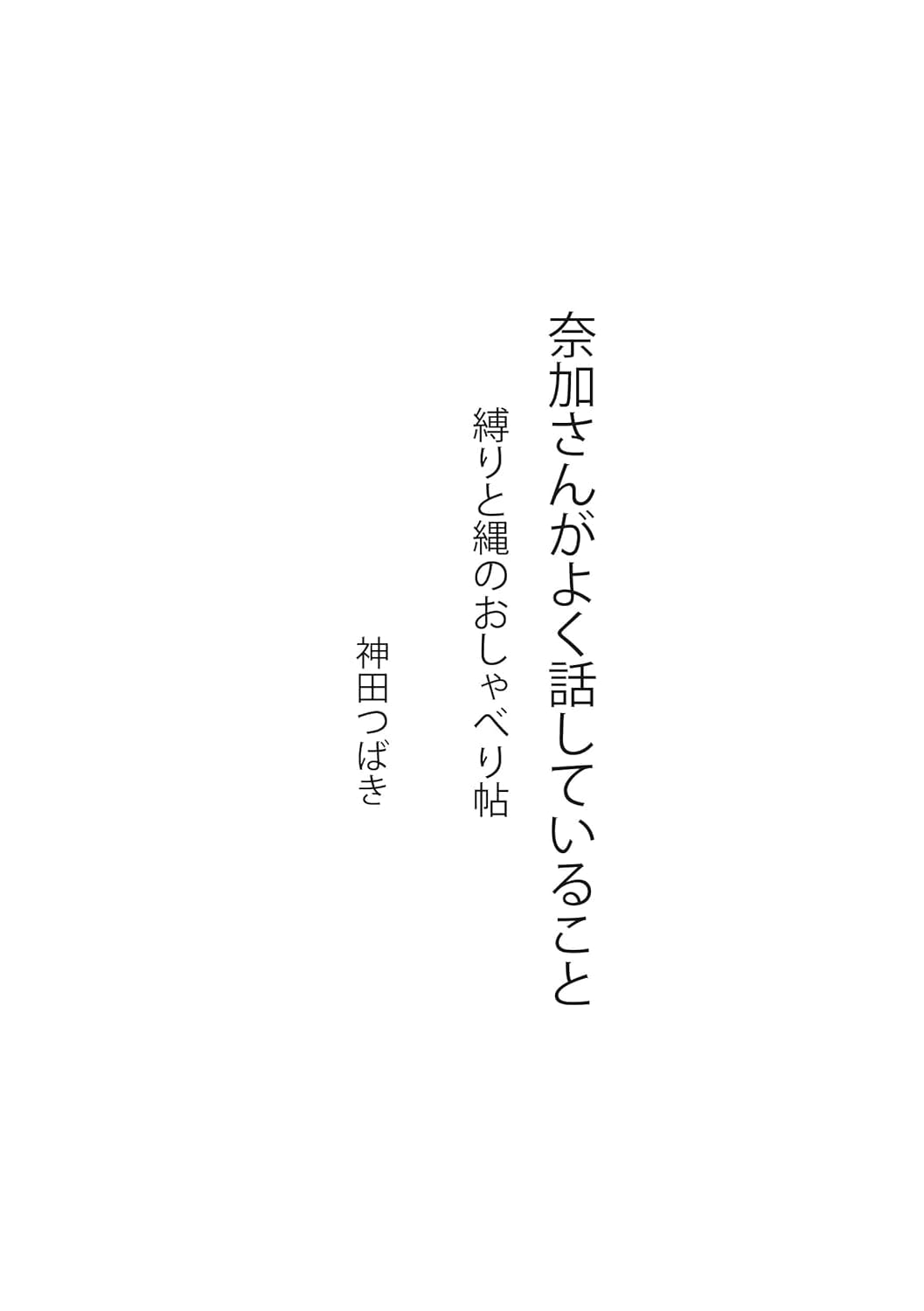
— Whispers in Rope: Naka Akira Talks about Bondage and Rope, Tsubaki Kanda
Nureki Chimuo never formally taught Naka-sensei; instead, he learned by observation. “You learn by watching—or rather, by stealing techniques with your eyes,” Naka-sensei often says.
One day during Kinbiken, Nureki Chimuo asked Naka-sensei to untie. “I was thrilled,” Naka-sensei recalled. “I could see how it was done in reverse. It was an invaluable opportunity to learn.”
Most people are likely familiar with Nureki Chimuo’s Kinbiken from the 1980s or his contributions to The World of Rope (縄の世界), New World of Rope (新・縄の世界), and Kinbaku Performance (緊縛パフォーマンス) produced by Cinemagic (シネマジック). Yet his impact on Kinbaku culture stretches much further back—dating to the 1950s, when he was in his early twenties. His first published work, The Travelling Actor of Pleasure and Cruelty (悦虐の旅役者), appeared in Kitan Club (奇譚クラブ) (November 1953, Showa 28).
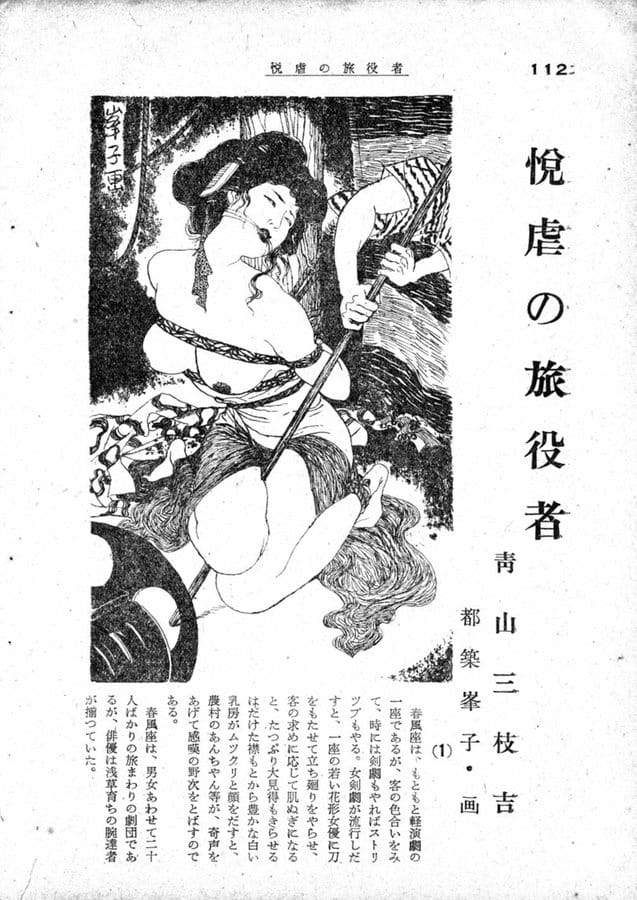
During this period, Nureki Chimuo also submitted works to Kitan Club (奇譚クラブ) and Uramado (裏窓) under various pseudonyms, including Aoyama Mieyoshi (青山三枝吉) and Iida Toyokichi (飯田豊吉). Around 1957, he met Suma Toshiyuki (須磨利之), also known as Minomura Kou (美濃村晃), a writer, illustrator, and Kinbaku-shi who contributed editorial work to early SM magazines such as Kitan Club, Uramado, Abu Hunter, and SM Kitan.
Nureki Chimuo eventually succeeded Minomura Kou as editor-in-chief of Uramado, using his real name, Iida Toyokazu (飯田豊一), continuing until the magazine ceased publication around 1965 — a period marked by public scrutiny and condemnation of such material. Later, around 1979 when Minomura Kou fell ill, Nureki Chimuo assumed responsibility for the Kinbaku work.
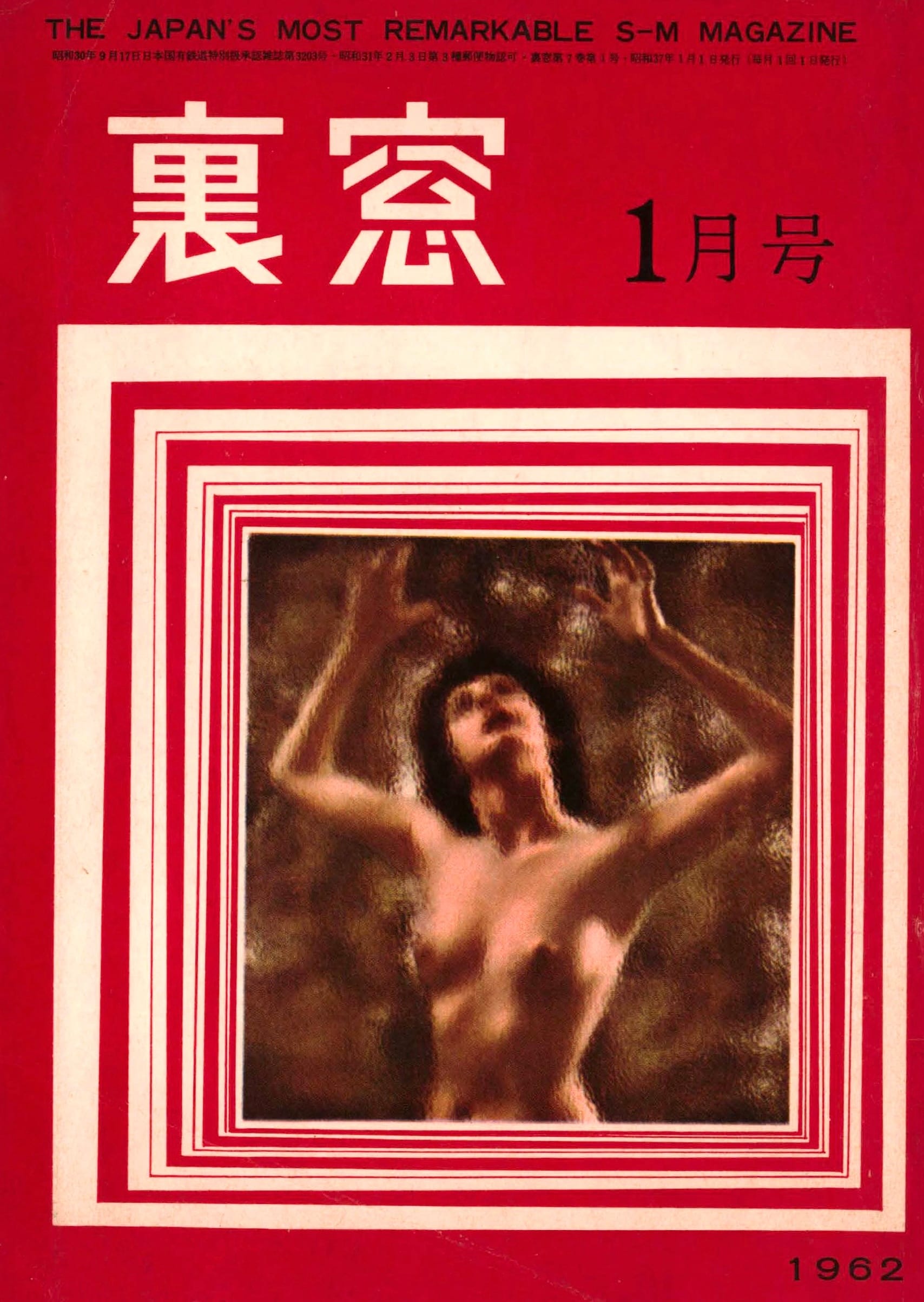
Minomura Kou, Nureki Chimuo, and Dan Oniroku were central figures in the golden age of Shōwa-era SM and Kinbaku. The 1970s saw a proliferation of SM magazines, and Nureki Chimuo contributed extensively to many of these publications, including SM Select and S&M Collector.
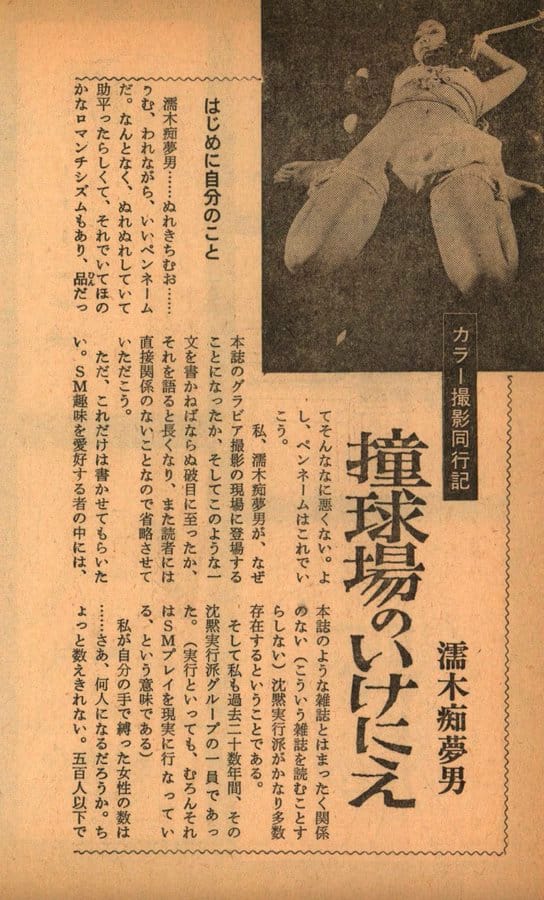
The pseudonym Nureki Chimuo first appeared in the February 1973 issue of SM Select, when Nureki was 43 years old. In Nureki Chimuo: Color Photography Accompanying Notes, he explained that the name derived from an old Chinese expression meaning “a man chasing an unfulfilled dream.”
As the number of magazines grew, so did the demand for Kinbaku work. Nureki Chimuo gradually assumed much of the rope work, particularly after Minomura Kou fell ill in 1979. During this period, he also began his collaboration with the legendary Kinbaku photographer Sugiura Norio (杉浦則夫).
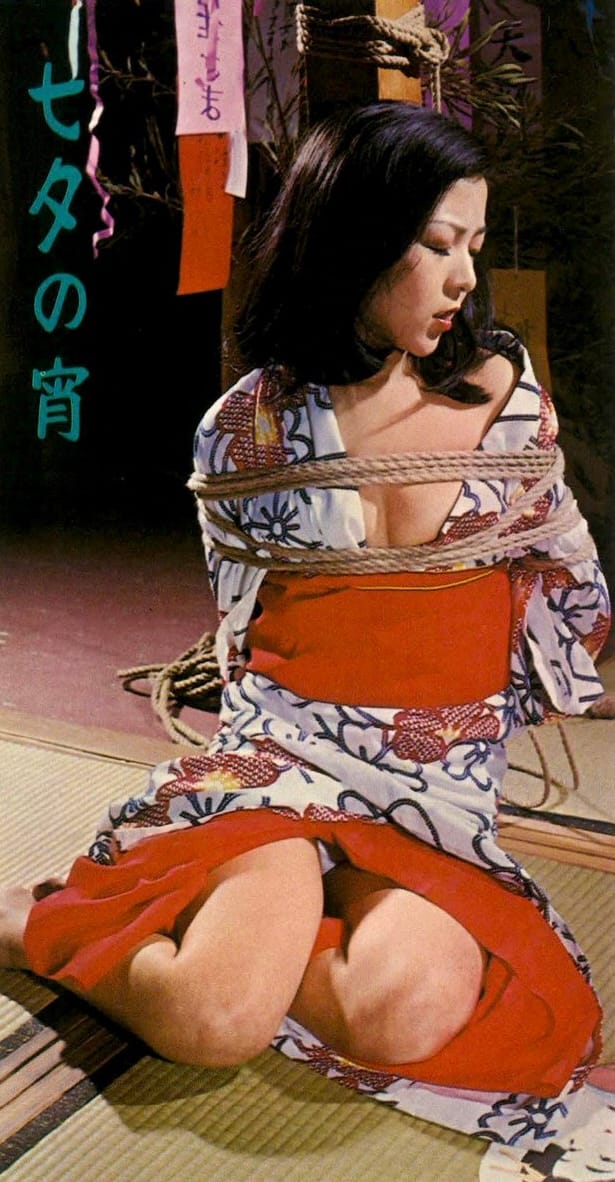
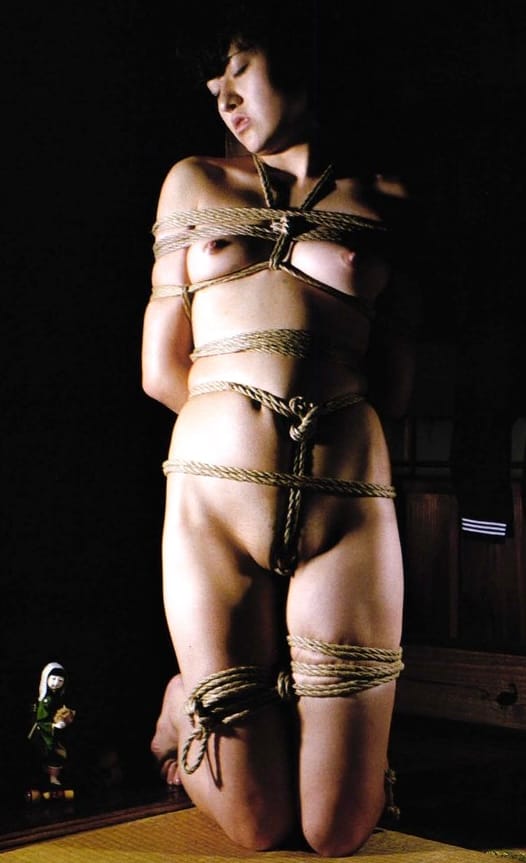
Around 1976, Nureki Chimuo was invited to tie at Kaigo no Hana (解語の花), an event that resembled modern Kinbaku photography workshops. It was here that he met photographers Kasei Katsuya (枷井克哉) and Fuji Akio (不二秋夫), who would later join him in forming the collaborative persona Toyomiki Ichirō (豊幹一郎). Works under Toyomiki Ichirō appeared in S&M Collector and allowed Nureki Chimuo to explore bondage freely, without editorial constraints, producing experimental pieces that expressed his unique vision of Kinbaku.
In the 1980s, Nureki Chimuo expanded into instructional videos, including Toyomiki Ichirō’s SM Documentary Part 2: How to Bondage (Bambi Video, 1982), and Nureki Chimuo’s Introduction to Bondage, Part 1 – Basics (Art Video, 1983). To further examine the essence of Kinbaku, he helped establish Kinbiken, where he tied guest models while all participants collectively explored the beauty of Kinbaku. Over the years, 165 sessions were held, continuing until 2009.
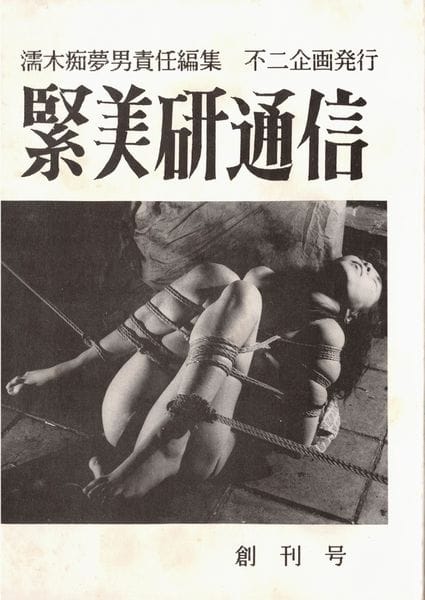
Nureki Chimuo explored Kinbaku through writing, photography, videos, and Kinbiken over the course of five decades. In 2012, he held Nureki Chimuo’s Rope Research Meeting (濡木痴夢男の縄研究会) at Ginza Black Heart, demonstrating his dedication to Kinbaku almost until the very end of his life.
When Naka described Nureki Chimuo’s rope work as “deep” upon first seeing it, he referred to Nureki’s careful attention to the emotional state of the woman being tied: it was not merely technical skill, but an understanding of the human heart.
— Whispers in Rope: Naka Akira Talks about Bondage and Rope, Tsubaki Kanda
Technique, after all, is nothing more than technique. In other words, it is merely skill.
テクニックというのは、しょせん、テクニックにすぎない。つまり、技巧にすぎない。
— Nureki Chimuo 濡木痴夢男
The intensity of pleasure in Kinbaku is determined more by the depth of the heart-to-heart connection than by superficial skill.
小手先のテクニックよりも、心と心の密度の深さに、緊縛の快楽度が比例してくる。
— Nureki Chimuo 濡木痴夢男
What we seek, ultimately, is a state in which the minds of the person tying and the person being tied are synchronized and unified, allowing them to become immersed in eroticism and experience pleasure together.
私たちが望むものは、あくまでも縛る側と縛られる側の心が同調し、一体化して、エロチシズムの中に陶酔し、快楽を味わいたいというムードです。
— Nureki Chimuo 濡木痴夢男
I would like to express my sincere gratitude to those who have generously shared their knowledge and guidance on Nureki Chimuo and the history of Kinbaku:
- Naka Akira sensei for sharing personal experiences and perspectives on Nureki Chimuo’s teachings.
- Kanda Tsubaki for sharing her experiences at Kinbiken and for the valuable insights in her book Whispers in Rope: Naka Akira Talks about Bondage and Rope
- Nawapedia & Ugo-san for their invaluable archival resources and insights.
Their contributions have been instrumental in helping to preserve and convey the legacy of Nureki Chimuo.
Author’s Note:
I never had the privilege of meeting Nureki Chimuo in person. All my knowledge comes from careful research as well as conversations with Naka-sensei and my seniors in the Kinbaku world. If there are any errors or corrections, please contact: [email protected]